
CNC machining or sheet metal: which does your part need?
Machining removes material from a block; sheet metal bends a flat part into shape. A quick guide to choosing the cheaper path for your design.
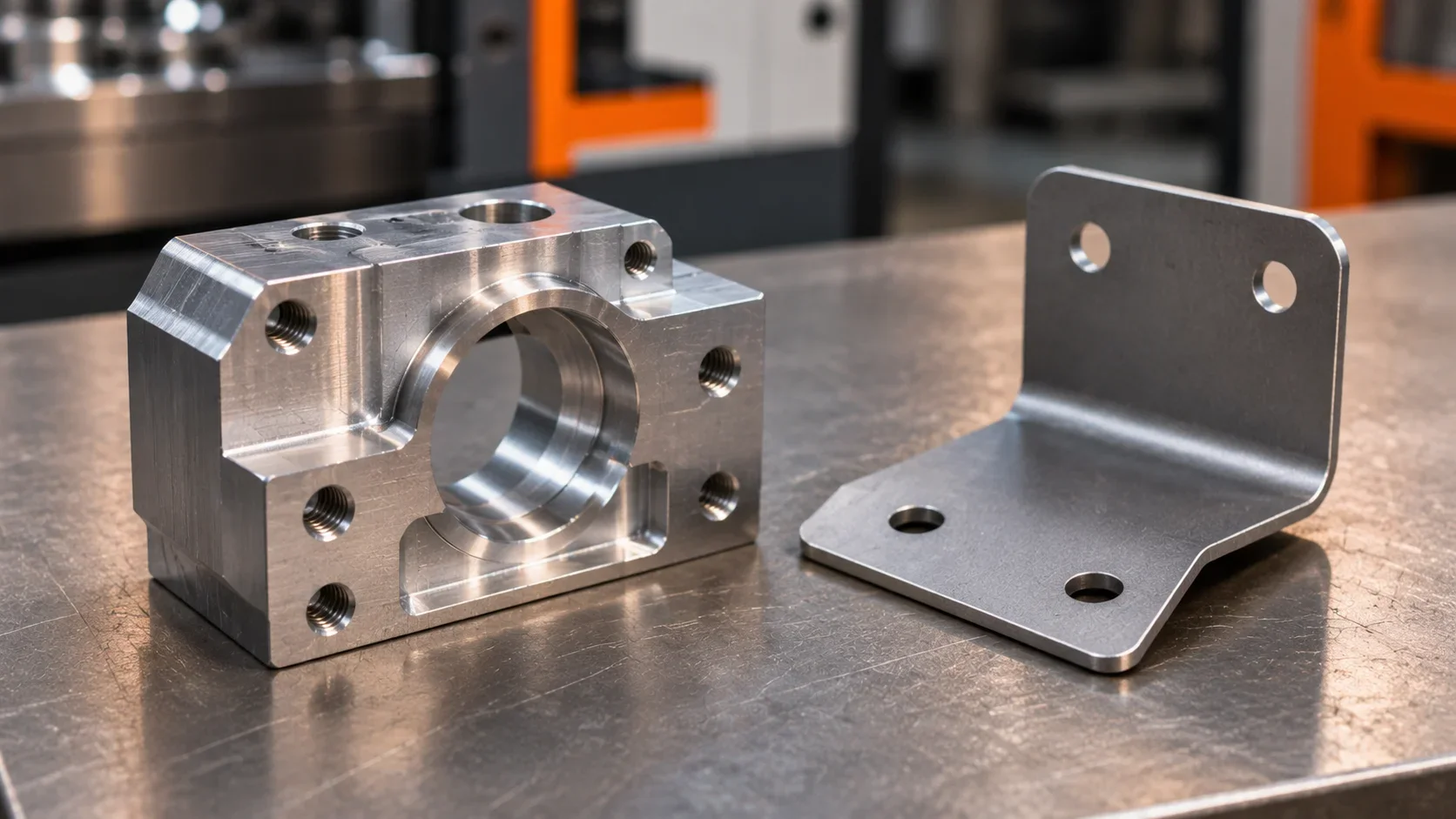
If the part is mostly thin walls of one thickness, with bends rather than pockets, sheet metal is usually faster and cheaper.
Two ways to make a part
CNC machining starts with a solid block, bar or plate and cuts away everything that isn't the part. Mills and lathes can carve pockets, bores, threads and precise surfaces on almost any face. It's flexible and accurate, but every bit of removed material is time on a machine and metal in the chip bin.
Sheet metal starts flat. A laser cuts the outline from a sheet, a press brake folds it into shape, and welding or pressed-in hardware joins the pieces. Because the material is already the right thickness, there's far less to remove, and parts move from cut to bend quickly, even in large quantities.
When sheet metal wins
Sheet metal is usually the cheaper path for brackets, enclosures, panels, covers and chassis. Look for these signs:
- The walls are all one thickness
- The shape is made of flat faces joined by bends
- Holes and slots go straight through rather than stopping partway
- Fasteners can be pressed-in hardware instead of tapped holes in thick stock
- You need dozens or hundreds, not one or two
It does have limits. Bends need a minimum distance from holes and edges, inside corners have a radius, and tolerances across a bend are looser than on a machined face. Designing with those rules in mind is what keeps a formed part affordable.
When to machine it
If it needs pockets, tight tolerances in three dimensions or features on every face, machine it. Housings with precise bores, shafts, gear blanks, manifolds and precision mounts all live here. Machining also suits very small runs and prototypes, because there's no tooling to set up beyond the fixture and the program.
It's also the answer when the part has to be thick and stiff in one spot and thin in another. Sheet metal can't do variable thickness. A mill can.
Often, the answer is both
Many assemblies use both: a machined mount bolted to a formed bracket. The precise, load-bearing feature gets machined, and the large, simple structure gets formed. Each part is made the cheapest way it can be, and the assembly still does its job.
When in doubt, send the drawing and ask. A good shop will often suggest a small change, like adding a bend relief or loosening a tolerance that isn't critical, that saves real money without changing how the part works.
Groundbreaking Manufacturing does both under one imaginary roof, with powder coating and assembly down the hall. The roof, the hall and Cam are all fictional. The rules of thumb are not.
Post Details
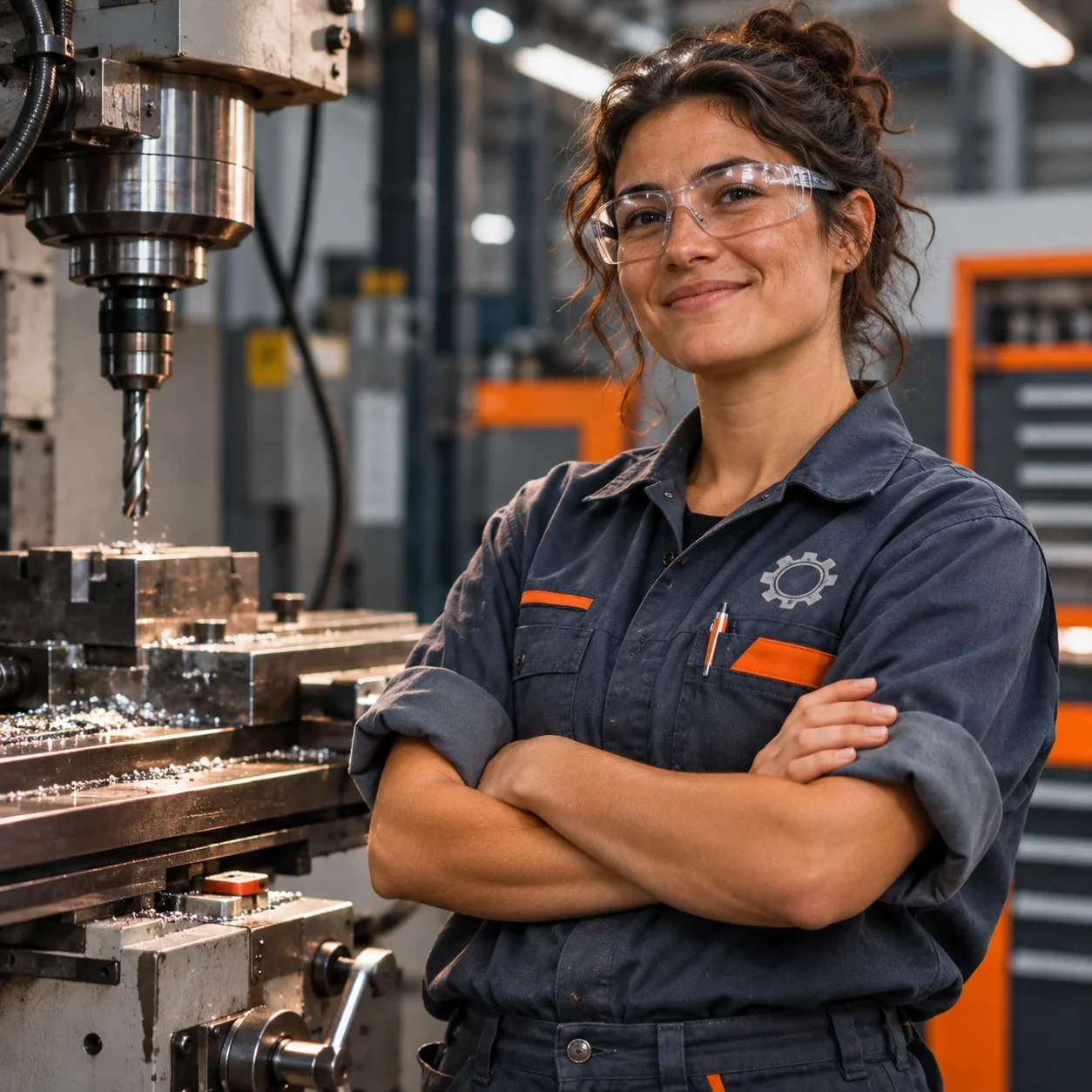
Cam programs the five-axis mills and can tell a bad tool path by the sound alone, a skill wasted on a factory that is silent.
October 9, 2026
Browse Categories